Industrial IoT's protection paradox
Industrial IoT protection gets described as a scale problem. But two sensors fifty metres apart, installed the same month, can fail for completely different reasons inside the same quarter. That is not an arithmetic problem, and adding more of the same protection does not solve it.
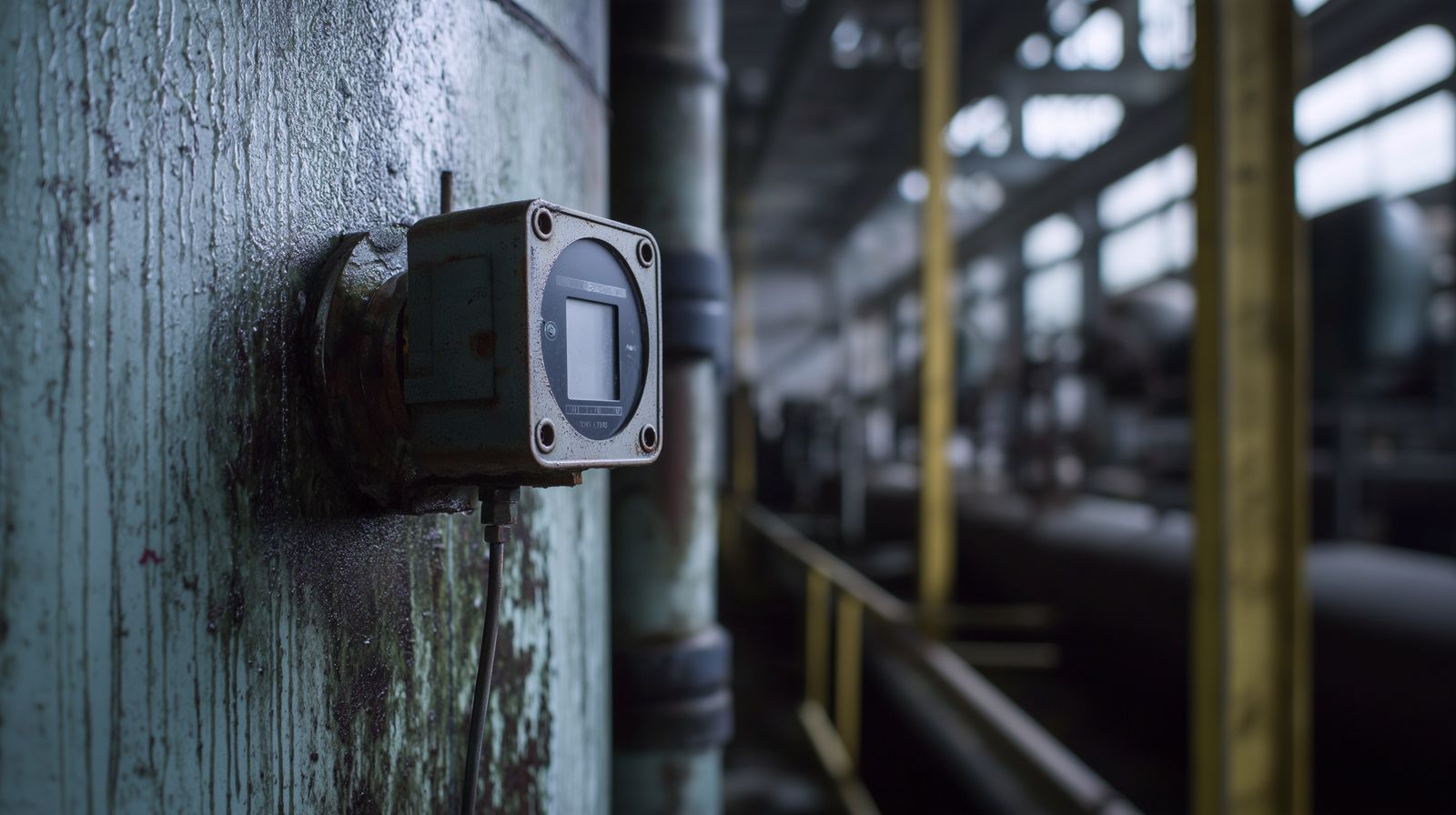
Industrial IoT gets discussed as a scale problem. More sensors on the floor, more square footage to cover, a maintenance team stretched thinner with every endpoint added. That version of the story is accurate as far as it goes.
What the scale framing leaves out is the part that actually determines whether a protection strategy works. Scale alone does not explain why two sensors fifty metres apart in the same facility, installed the same month, can fail for completely different reasons inside the same quarter. A process plant, a logistics yard and a substation are not the same environment wearing different signage, and treating them as one estate with one spec is where the real cost gets built in early.
Heterogeneity, not headcount
A chemical plant's sensor estate is rarely one environment. It is a vibration zone next to a chemical-exposure zone next to a condensation-prone enclosure next to a particulate-heavy line, sometimes within the same building. Two hundred distinct microenvironments inside a single facility is not an unusual number.
The established response has been to write one conservative spec and apply it everywhere: pick an enclosure rating tough enough for the worst zone on site and use it across the estate. That approach is defensible, and it is not a mistake. Procurement teams have good reasons to want one line item instead of twelve, auditors have good reasons to want one number to check against, and for a facility with one process running in one building, the uniform spec and the correct spec are often the same thing.
It stops working as the estate grows uneven. A spec conservative enough for the harshest microenvironment is usually expensive overkill for the mildest one, and a spec calibrated to the average leaves the harshest zones under-protected. Heterogeneity is a different problem from scale. It cannot be solved by adding more of the same solution, because no single solution fits the whole site.
The economics of unreachability
Industrial sensors increasingly sit somewhere a technician does not visit casually: up a flare stack, inside a sealed process vessel, on a rooftop HVAC unit, buried in cable trays behind other equipment. The deployment decision that matters is not the sensor's purchase price. It is what happens when that sensor needs a truck, a permit, a confined-space team or a shutdown window just to be reached.
A field failure in industrial electronics can cost up to 100 times the original assembly cost once installation and replacement labour are counted. That multiple is not really about the failure. It is about access. A failure somewhere a technician can reach in ten minutes is an inconvenience. The same failure somewhere that needs scaffolding and a permit is a budget line.
That changes what "protected" has to mean. For a sensor nobody visits often, the coating decision made before installation is close to the only protection decision that will ever get made.
Consumer-grade boards in industrial-grade boxes
Sensor manufacturers competing on unit cost and time to market draw from the same component ecosystem that supplies consumer electronics, because that is where the volume and the price curve live. The enclosure gets an industrial rating. What sits inside it, often, was never designed against an industrial-grade assumption.
That mismatch will not show up on a datasheet, because the enclosure and the board make two separate promises and only one of them gets tested at the point of sale. A temperature sensor, a vibration monitor or a wireless gateway competing on unit price is built from the same radios, connectors and passive components that go into a consumer product, chosen for cost and availability rather than for what happens to them after five years behind a gasket. An enclosure rated for exactly the conditions it will meet is not, by itself, the reason a device survives a decade of them. The weak point sits behind the rating, not in it.
This is also the part of the paradox a facility-wide spec cannot fix. The fix has to live inside the enclosure, on the board itself, not on the box around it.
Condensation does not need a breach
The automotive piece published here last month described a paradox that carries over directly: a sealed enclosure keeps rain out, and in doing exactly that, traps the humid air that was already inside it. Every thermal cycle condenses a little of that moisture onto the coldest surface available, and the coldest surface is frequently the board.
Unheated industrial enclosures see that cycle harder than a vehicle cabin does. A rooftop unit or an outdoor cabinet swings across a wider temperature range with less control over dwell time, and does it for the working life of the equipment rather than on a maintained schedule. The enclosure does not have to fail for the board inside it to see standing moisture. It has to work exactly as designed.
That is a second failure mode running alongside the ingress problem the industry already worries about, not instead of it. A protection strategy aimed only at keeping water out never addresses the moisture that was never kept out to begin with.
Retrofit is the normal case, not the edge case
Most industrial estates are mixed-age by default. Sensors get added in waves, a few hundred at a time as budget and project scope allow, onto equipment installed across a decade or more. There is rarely a single moment when a facility's IoT estate gets specified once and built out in full. The protection question looks different depending on which side of the installation date a given device sits.
Coating is a manufacturing-stage decision. It is applied to a board before assembly, not sprayed onto a sensor already bolted to a stack sixty feet up. That is a real limitation worth stating plainly: it protects what gets built or replaced from here forward. It does nothing for the installed base already in the field, and a facility relying on it to fix an existing reliability problem across its full estate will be disappointed.
What it does change is the economics of the next replacement cycle. Every sensor that fails and gets swapped is a chance to change what goes in, and on an estate that is both unreachable and heterogeneous, that one decision carries more weight than it would somewhere easier to service.
What changes at board level
Heterogeneity outside does not have to mean a different coating for every zone. External conditions vary enormously, from condensation and sustained humidity to chemical exposure and particulates, but at the board they converge on one mechanism: moisture and contaminants reaching the electronics and creating conductive pathways between biased features. Corrosion and electrochemical migration follow from there.
That convergence is what makes a single protection strategy viable across an uneven estate. The coating does not have to mirror every variation in the environment, because it is addressing what all those variations produce. Where the chemistry or the exposure is unusually aggressive, the specification and the qualification change. Across much of the estate they do not.
It also means coating works best as part of the product design rather than as a site-specific remedy. Plasma-applied coatings protect complex assembled electronics at the molecular level, penetrating assembled geometries and eliminating trapped air, with minimal added mass or dimensional change. Liquid-applied systems offer a different balance of coverage, thickness and processing depending on the application. Neither removes the need to qualify against the actual operating environment. Both move protection off the box and onto the board.
The paradox is not arithmetic
The scale framing treats industrial IoT protection as an arithmetic problem: more devices requiring more coverage, solved by doing the same thing more times. That framing is comfortable because it has a clean answer. Spend more, cover more, the ratio holds.
The heterogeneity framing does not offer that comfort. The estate is not one problem repeated at volume. It is dozens of smaller, different problems sharing a facility, most of them in places nobody visits often, most of them built from the same components regardless of how tough the box around them looks. Solving that is not a matter of scaling the existing approach. It is a matter of deciding, device by device, before the sensor goes in, because after it goes in the deciding gets a great deal more expensive.
An industrial estate does not fail as a fleet. It fails as two hundred separate bets, each one placed the day a sensor was specified rather than the day it broke.