Beyond IP-rated: the protection vocabulary device makers actually need
An IP rating certifies something real and certifies it precisely. It just doesn't certify reliability, and somewhere in the last decade the industry started treating it as though it did.
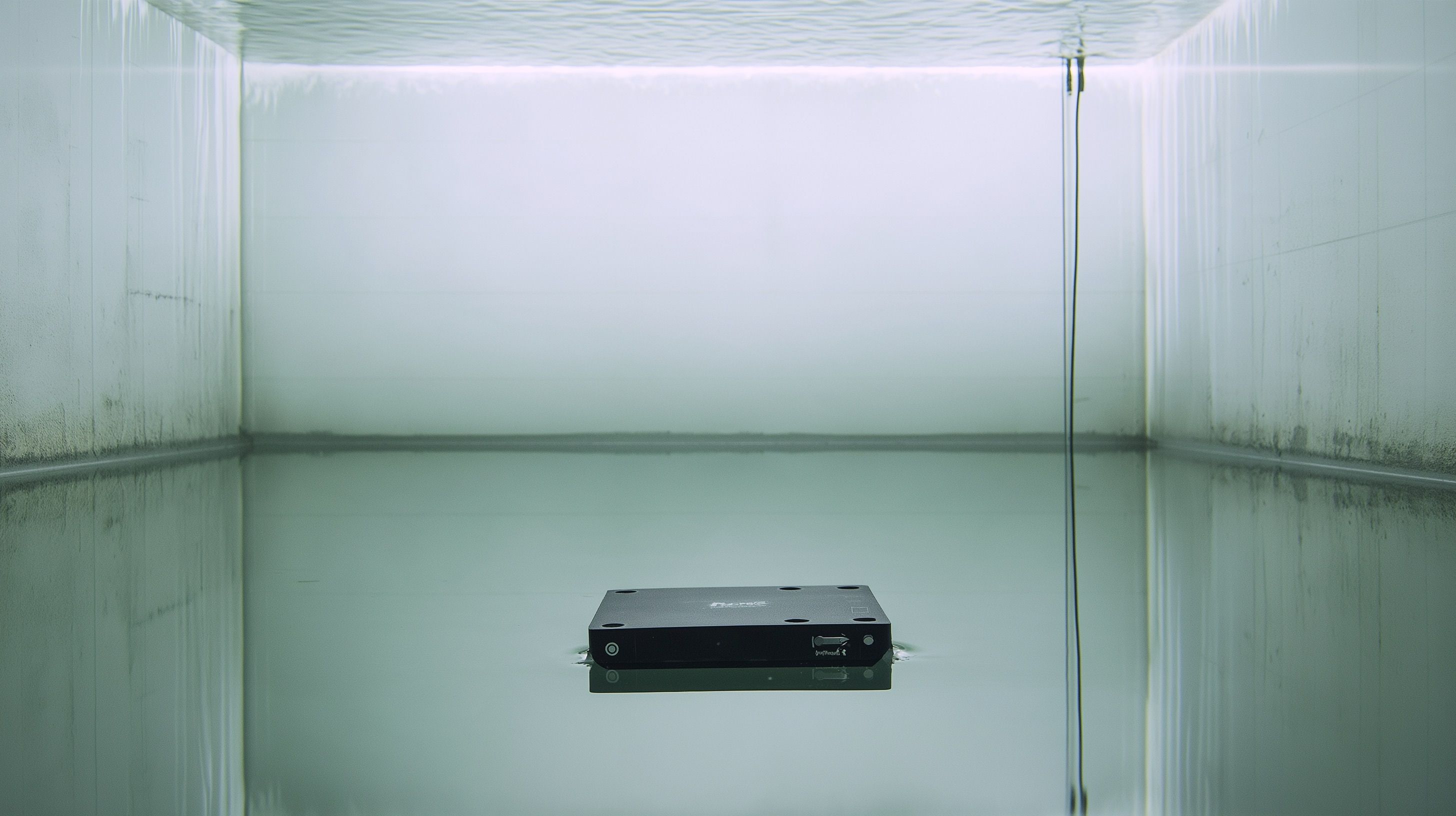
Ask a product manager how well their device is protected and the answer usually arrives as a number. IP67. IP68. Occasionally IPX4, said slightly more quietly.
It is a good answer to a question nobody quite asked. An IP rating certifies something real and it certifies it precisely. It just does not certify reliability, and somewhere in the last decade the industry started treating it as though it did.
What an IP rating actually certifies
IEC 60529 defines a two-digit code. The first digit covers solid objects, from fingers down to dust. The second covers liquids, and it is the one that ends up on the box.
The 7 in IP67 is the liquid digit: immersion in one metre of clean, still water for thirty minutes. An 8 means deeper or longer, to a depth the manufacturer specifies. The 6 in front of it is a separate claim about dust, so IP67 asserts dust-tightness and that immersion result together. That is the whole claim. It is a controlled laboratory condition, performed on a device in new condition, with a defined liquid at a defined depth for a defined time.
Nothing about that is dishonest. The standard does what it says. The difficulty is that almost no device fails the way the standard tests.
The liquids that are not in the standard
Clean still water is the least aggressive liquid a device will meet in service.
Sweat is not water. It carries salt and it carries the electrical conductivity that comes with salt, which is what turns a moisture event into a corrosion event. Sunscreen is worse, and it stays on the surface for hours. Cleaning chemicals in a hospital or a food plant are formulated to be aggressive. Hand cream, spilled coffee that is mostly sugar, the alcohol wipe used between patients.
Many of these have lower surface tension than water, which matters more than it sounds. A liquid with low surface tension wicks into gaps that water simply cannot enter. A seal that holds against clean water at one metre can be defeated by a fluid that walks into the seam under no pressure at all.
None of that appears in IEC 60529, and none of it is a criticism of the standard. It was never written to cover it.
The failure that starts inside
The most common moisture failure mode in sealed devices involves no ingress event whatsoever.
A sealed enclosure traps the air that was inside it when it was assembled, and that air carries humidity. It also keeps admitting more. A single water molecule passes a seal far more readily than liquid water does, so vapour continues to enter an enclosure that liquid cannot. Once inside and condensed, it is in the liquid phase, and the same seal that let the vapour through now prevents it leaving. The device warms in use and cools when it stops. Each cycle moves moisture onto the coldest available surface, which is frequently the board. After a few hundred cycles there is liquid water sitting on electronics that were never exposed to anything from outside.
An IP test cannot detect this, because it is not an ingress problem. It is a consequence of sealing. The better the seal, the more reliably it keeps that moisture in.
A rating with no lifetime dimension
An IP rating is pass or fail, once, on a new device.
Devices do not stay new. Gaskets take a compression set. Adhesives creep. A single drop can distort an enclosure enough to break a seal without leaving a visible mark. Ports and buttons wear. The device that was IP67 in the lab in month one is an unrated device by month twenty, and nothing in the certification speaks to that.
This is where the gap between a rating and reliability becomes concrete. Corrosion, dendrite growth and electrochemical migration are cumulative processes. They need years, and a test conducted once on a new device has no way to represent a service life.
What happens after the seal is breached
Every enclosure is eventually breached. This is not a pessimistic claim, it is what field data shows.
The question that actually matters is what the device does next, and here the sealing strategy has a specific weakness. A device protected only by its enclosure has one line of defence. Once water is inside, the bare electronics meet it directly, and a device that was rated to survive a metre of immersion fails from a teaspoon.
A device with protection at board level behaves differently after the same event. The enclosure has still failed. The electronics have not.
That difference does not show up anywhere in an IP number, because the rating describes the enclosure rather than what it contains. A rating that tests the enclosure is not a rating that tests the electronics.
Sealing gets harder as devices get more interesting
The mechanical seal has also been quietly losing ground to product design.
Foldable phones are the clearest case. A hinge is a moving joint that has to open and close for the life of the device, which makes it extremely difficult to seal reliably. Clip connectors are ingress points by construction. Every port, speaker grille and microphone aperture is a hole somebody has to close without degrading what the hole was for.
The pattern generalises. As devices get thinner, more articulated and more sensor-dense, the number of things that have to be sealed rises while the space available to seal them falls. Protection strategies that depend entirely on mechanical exclusion are being asked to do more each product generation, with less to work with.
The repair problem
There is one more reason a sealing-first strategy is under pressure, and it comes from regulation rather than physics.
The tightest seals are the most permanent ones. Adhesive-bonded enclosures and potted assemblies protect well and they make a device difficult or impossible to open. Right-to-repair requirements across major markets are moving in exactly the opposite direction, toward devices that can be opened, whose batteries can be replaced and whose boards can be serviced.
A protection approach that survives that shift has to work on a device designed to be opened. Board-level protection that permits rework does. Permanent sealing, by definition, does not.
A better set of questions
None of this makes IP ratings worth abandoning. They are a good shorthand for one specific thing, they are frequently a contractual requirement, and P2i coatings often work alongside mechanical sealing rather than instead of it. In several deployments the coating exists precisely to give a sealed device a second line of defence.
The argument is not that IP ratings are wrong. It is that an IP number cannot carry the weight of a reliability specification, and using it as one leaves five questions unasked:
- What liquids, and how often? Not water. The actual fluids the device meets, their surface tension, and whether exposure is an accident or a daily occurrence.
- What failure mode? Corrosion, dendrite growth, electrochemical migration and intermittent contact failure are different problems with different solutions. "Waterproof" names none of them.
- Over what duration? How many thermal cycles, across how many years, in which markets. The answer determines whether cumulative processes have time to matter, and they usually do.
- What happens after breach? The enclosure will fail at some point in the population. What is the device's behaviour on the day after that, and is there a second line of defence.
- Can it still be opened? Whether the protection strategy permits repair, battery replacement and board-level service, or forecloses them permanently.
Those five questions produce a protection specification. An IP number produces a marketing claim that happens to also be a test result.
Both have a place. They are not the same thing, and the industry has spent a decade acting as though they are.