Automotive electrification's invisible reliability problem
Electrification is discussed as a battery story. The reliability consequence is that a modern vehicle carries more than 200 electronic control units, and every one of them has to survive fifteen years in conditions that would destroy a consumer device in a season.
Electrification gets discussed as a battery story. Range, charge times, cell chemistry, thermal runaway. Those are real engineering problems and they absorb most of the attention.
The change that matters more for reliability is quieter. A modern vehicle carries more than 200 electronic control units. Electrification adds to that count rather than replacing it: battery management, power electronics, onboard charging, thermal management for the pack. Each one is a populated circuit board expected to work for fifteen years in conditions that would destroy a consumer device in a season.
Module count is the real change
Vehicle-level reliability is roughly the product of module-level reliability. Add modules while holding per-module reliability constant and the vehicle gets less reliable, not more. Per-module reliability has to improve simply to hold the line.
That is the arithmetic behind a shift most people outside the supply chain have not noticed. The reliability bar for automotive PCBA has moved sharply upward over the last decade, and it did not move because the environment got harsher. It moved because there are far more boards in the vehicle, and a growing share of them are safety-critical. An infotainment failure is a warranty claim. A battery management or ADAS failure is something else entirely.
What a vehicle actually does to electronics
Automotive electronics operate from -40°C upward, with the ceiling depending on where the module sits and what it does. Ambient requirements commonly run to 85°C. Higher-power electronics generate their own heat on top of that, pushing local temperatures at the board to 125°C or 150°C. Thermal cycling runs several times a day for the life of the vehicle, and to that add road vibration, under-bonnet heat, and humidity extremes that vary by market rather than by design.
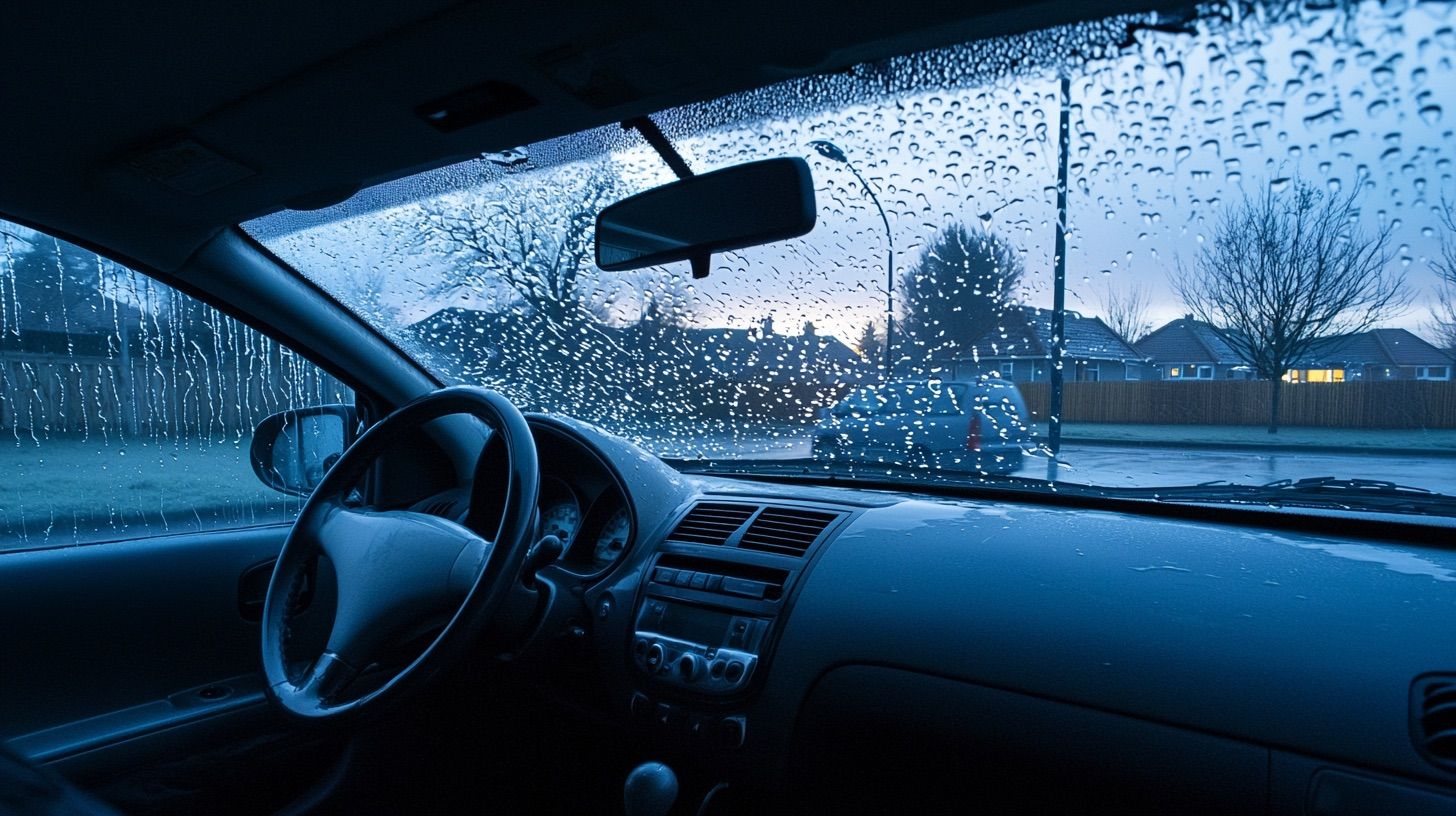
The failure mode that causes most difficulty is more specific than any of those. Condensation behind sealed fascias pools directly on circuit boards. A sealed enclosure keeps rain out effectively, and it also traps the moist air already inside, which condenses onto the coldest surface available every time the cabin cools. The board is frequently that surface. Sealing the enclosure solves the ingress problem and creates the condensation problem.
Fifteen years of that is a different proposition from the two or three years a phone is designed to survive. Corrosion and electrochemical migration are cumulative processes. They do not announce themselves in a validation cycle. They arrive in year six, in a vehicle parked outside in a coastal market, and by then the programme has shipped several million units.
Where the incumbent coating stops scaling
The established answer to this is a liquid conformal coating, typically acrylic, sprayed at around 50 microns. It has protected automotive electronics for decades and it still works on the boards it was designed for.
It struggles with the boards being built now. Three limitations show up consistently in Tier 1 conversations.
A sprayed film cannot achieve component underfill, and that creates two distinct problems on components with connections beneath the package, such as BGAs, QFNs and DFNs.
The first is coverage. The coating goes over the package rather than beneath it, sealing a pocket of untreated air under the component. That pocket becomes a micro-climate, and it can be more prone to failure than an uncoated board would be.
The second is the opposite case. Where coating does spread under the component, it sits between materials with mismatched coefficients of thermal expansion. Under thermal shock the coating expands at a different rate from the package and the board, and the resulting stress can crack the component or its joints.
Both get worse as boards miniaturise and component density rises.
Coating both sides adequately is difficult, and certain connection components including solder joints are not well suited to spray-applied protection at all. A board that is nominally protected can carry unprotected areas at precisely the points where a corrosion failure becomes an open circuit.
Then there is masking. Automotive boards are connector-dense, and every connector is a keep-out area requiring a mask before coating and its removal afterwards. On a line running tens of thousands of units a day, masking is a significant labour and floor space cost, and a recurring source of rejects.
What automotive qualification actually demands
Automotive qualification is not a single test. It is a battery of them, and each one can be the disqualifier.
Temperature and humidity cycling under IEC 60068-2-38 is a central one, and the detail that matters is that the samples are biased throughout. The board is powered while it is being cycled, which is when electrochemical migration actually happens. An unpowered humidity test is a much easier test, and a much less informative one.
Around it sits the rest: electrostatic discharge, fungus resistance, flexibility, moisture and insulation resistance, thermal shock, temperature and humidity ageing, flammability. Coating performance is governed by its own standards, IPC-CC-830 and UL 746E among them, and these apply across automotive electronics rather than only to powertrain and battery management. The common thread is that each standard exists to prove the coating still protects after a specific environmental stress. A coating has to satisfy all of them rather than excel at one.
Regulatory compliance runs in parallel. RoHS, GADSL, SVHC, PAH and plasticiser requirements all apply. A solvent-free, halogen-free process starts from a position that satisfies most of them, which removes a category of compliance risk before it arises.
P2i Barrier has passed this qualification set on infotainment PCBA, retaining functionality before, during and after temperature and humidity cycling at working voltage. The result worth noting is not that it passed. It is that no masking was required for the connectors, which changes the line economics of every unit that follows.
At Tier 1 scale
Qualification proves a coating works on a board. Deployment is a different question, and it is mostly about supply chains.
Automotive protection decisions are not made by OEMs. The OEM sets the requirement, and the Tier 1 supplier owns the module and its manufacture. A protection technology has to qualify with the Tier 1 and then integrate into manufacturing infrastructure that already exists, frequently across several countries at once. A technology that works in a lab but requires boards to be shipped to a coating facility and back has added a stage to a process built without one.
P2i's model places coating equipment directly into the manufacturing site. That matters more in automotive than elsewhere, because an infotainment module can carry six separate PCBAs, a main board and five sub-boards, and each one has to be protected without adding handling steps to a line already running at rate.
The scale question is answered by P2i's production record rather than by any single programme: more than ten billion devices protected over twenty years, currently adding over 100 million a year.
The decision that locks
Here is what makes this an invisible problem rather than a visible one. Automotive protection is qualified once, early, and then locked for the life of the programme. A coating specified during new product introduction will still be on that board seven years later. Nobody revisits it, because revisiting it means requalifying, and requalifying an automotive module is a project rather than a decision.
That places unusual weight on a decision taken early. Automotive validation typically runs a couple of years ahead of production, which is long enough to do the work properly and long enough that the choice is settled well before anyone sees a consequence. A protection technology that cannot underfill dense components, or that demands masking on every connector, is not a problem the programme corrects later. It is a cost and a risk carried for the full production run.
The one recoverable part is rework, and in automotive it is recoverable in the factory rather than in the field. A module that fails end-of-line test can be repaired and shipped instead of scrapped, which matters when the unit carries several populated PCBAs and all of their accumulated value. Once the vehicle is on the road a failed module is replaced rather than repaired, so this is a manufacturing economics argument, not a service one.
Electrification will keep adding modules. The vehicles will keep getting quieter, more capable, and more electronically dense. The protection question gets decided once per programme, well before any of that reaches a customer, and it is worth deciding it while the board layout can still respond to the answer.