A repaired device is not the device that was tested
Right to repair is usually read as a disassembly problem. The quieter consequence is inside the casing: a device opened and resealed outside the factory can no longer rely on its seal, so protection has to live on the board and survive the repair.
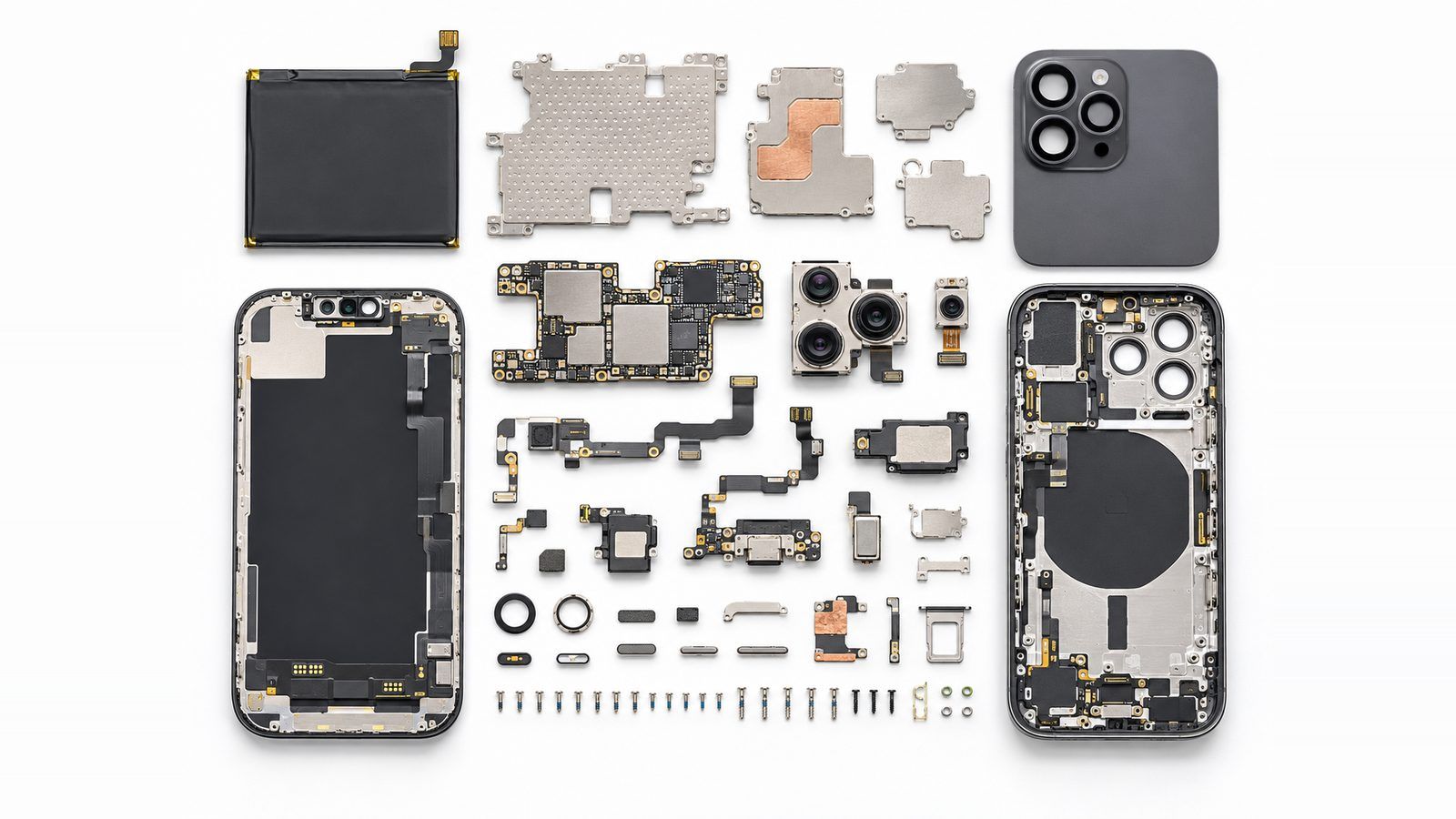
Right to repair is usually discussed as a question of access. Screws instead of glue, and batteries that come out without heat and solvent. Spare parts held for years after a model leaves the market, and repair manuals that independent shops can actually get. That framing is correct, and it is the right first problem to solve. Europe's regulation is aimed squarely at it, and manufacturers are already designing for it.
The consequence that gets less attention happens after the repair. A phone goes into an independent shop for a new battery. The technician warms the back panel, lifts it, swaps the cell and closes the device again with the adhesive gasket that happens to be on the bench, pressed by hand rather than by a fixture. The phone goes back to its owner, back into pockets and the weather. It looks identical to the device that passed its water resistance test. It is not that device anymore.
This is news rather than forecast. Member states had until 31 July 2026 to transpose the Right to Repair Directive, (EU) 2024/1799, and on 25 September the Commission sent letters of formal notice to 18 member states that had not notified full transposition. Ecodesign rules for smartphones and tablets have applied since June 2025. Right to repair is now part of how phone and tablet programmes get specified.
Repairability and sealing pull in opposite directions
Long-life sealing has mostly worked by being hard to undo. Adhesive-bonded back panels keep water out because they are bonded. Potted assemblies protect because the potting is permanent. At board level, thick conformal films do a similar job. Each one is effective for the same reason it frustrates a repair.
Repair requires the opposite. The device has to open cleanly, accept a new part and close again, possibly several times across its life, and not always in the factory that built it.
European regulation asks for both at once. The ecodesign rules for smartphones and tablets, Regulation (EU) 2023/1670, require spare parts and repair information so devices can be fixed. The same regulation sets a minimum level of protection from dust and water, IP44, alongside those repairability requirements. The Commission's impact assessment explains why: repairability requirements "should not lead to designs with less ingress protection." The rule asks for a device that can be opened and that stays protected. Those two requirements are in tension, and the regulation leaves the engineering of that tension to the manufacturer.
The seal that goes back on is not the seal that was tested
An IP rating describes a specific object: a new device, assembled in the factory, with fresh gaskets, tested once. Beyond IP-rated made the case that this snapshot cannot carry a reliability specification even for a device that is never opened.
Right to repair adds a sharper version of the same problem. After a third-party repair, the device that earned the rating no longer exists. The adhesive may be different. The bonding pressure was applied by hand. The gasket may have been reseated over a sealing surface that was not perfectly clean. None of this is careless; it is what repair outside a factory looks like. And nobody re-tests the result.
If the board depends on the enclosure for its protection, every repair is a reliability event. A device built to be repaired may be opened two or three times across its working life. Each opening resets the seal to a condition nobody has measured, and the electronics inherit whatever the last repair left behind.
What a coating has to do in a repairable device
Protection on the board itself does not depend on the enclosure, which is why it matters here. In a repairable device, though, a coating takes on two jobs a permanently sealed device never asked of it.
The first is to protect the electronics on its own terms, because the enclosure after a repair may not. Moisture that gets past a reseated gasket meets the board, and whether the device keeps working depends on what is on the board when it does.
The second is to stay out of the way of the repair. A technician should be able to solder through it, replace a component or a battery, and close the device without stripping the coating first or re-masking anything.
Conventional conformal coatings and parylene have protected electronics well for decades, and they remain the right answer in plenty of applications. In a repair setting, the same thickness and permanence that make them durable become the obstacle. They often have to be removed before rework, which is slow and skilled work, easy to get wrong outside a production line, and in some cases not possible at all.
Molecular-level coatings change that trade. Deposited by plasma, they protect the board without forming a thick film, and P2i coatings are fully reworkable: battery replacement, component swap and board-level repair go ahead without stripping, and without potting to cut away.
That leaves a fair question: what happens to protection at the reworked spot itself? The most robust answer is to put the repaired board back through the plasma process. That is not always practical, since many repair locations will not have plasma equipment, and in those cases a liquid coating dispensed locally can restore protection at the repaired area.
Even with no recoating at all, the repair is more contained. Rework on a plasma-coated board is surgical: only the spot that was reworked is disturbed, and the rest of the board stays protected. Stripping a conformal coating or cutting away potting typically exposes a much wider area than the repair itself needed.
Where this lands for an OEM programme
Reworkability is usually framed as a service benefit. Its larger effect is on manufacturing economics. A unit that fails end-of-line test on a line using a reworkable coating can be repaired and shipped, rather than scrapped with all the value already built into it. The factory scrap piece set out that arithmetic in full. In one deployment, replacing a parylene process that had plateaued at 3% scrap with P2i Barrier took scrap at volume to essentially zero.
Right to repair moves that decision earlier. Once repairability is written into a phone or tablet specification, the protection approach has to be chosen with it, at the design window, rather than added after qualification. A coating that blocks rework, or a sealing strategy that only works if nobody ever opens the device, is no longer a late-stage compromise. It is a specification problem.
The regulation's scope is still narrower than the direction of travel. Laptops, for example, are outside the directive's current product list, but the pressure on repairability across portable electronics is moving one way. Two device programmes we have worked on this year were shaped in part by exactly this requirement.
P2i has worked in a category where devices are serviced routinely for a long time. More than 100 million hearing aids carry P2i protection, in a product that gets opened, cleaned and repaired as a matter of course. Protection that survives a service visit is not a new requirement for that industry. Right to repair is making it a requirement for everyone else.
What protection is for
Right to repair is often described as a cost imposed on manufacturers. For protection, it does something more useful. It changes what protection is for.
The old job was to keep a sealed box dry, once, as it left the factory. The new one is to keep a board working across a life of openings, in hands the manufacturer will never see. That job cannot be done by the seal alone, because the seal is the part that gets replaced. It has to be done on the board, and it has to be decided before the first device ships.