Automotive Electronics Protection — Choosing the Right Coating for Every Application
Automotive electronics operate in conditions that would destroy standard consumer PCBA — under-bonnet heat cycling, road vibration, condensation behind sealed fascias, humidity extremes from -40°C to 85°C. The coating selected at qualification stage has implications for yield, rework, and field reliability across the lifetime of the vehicle.
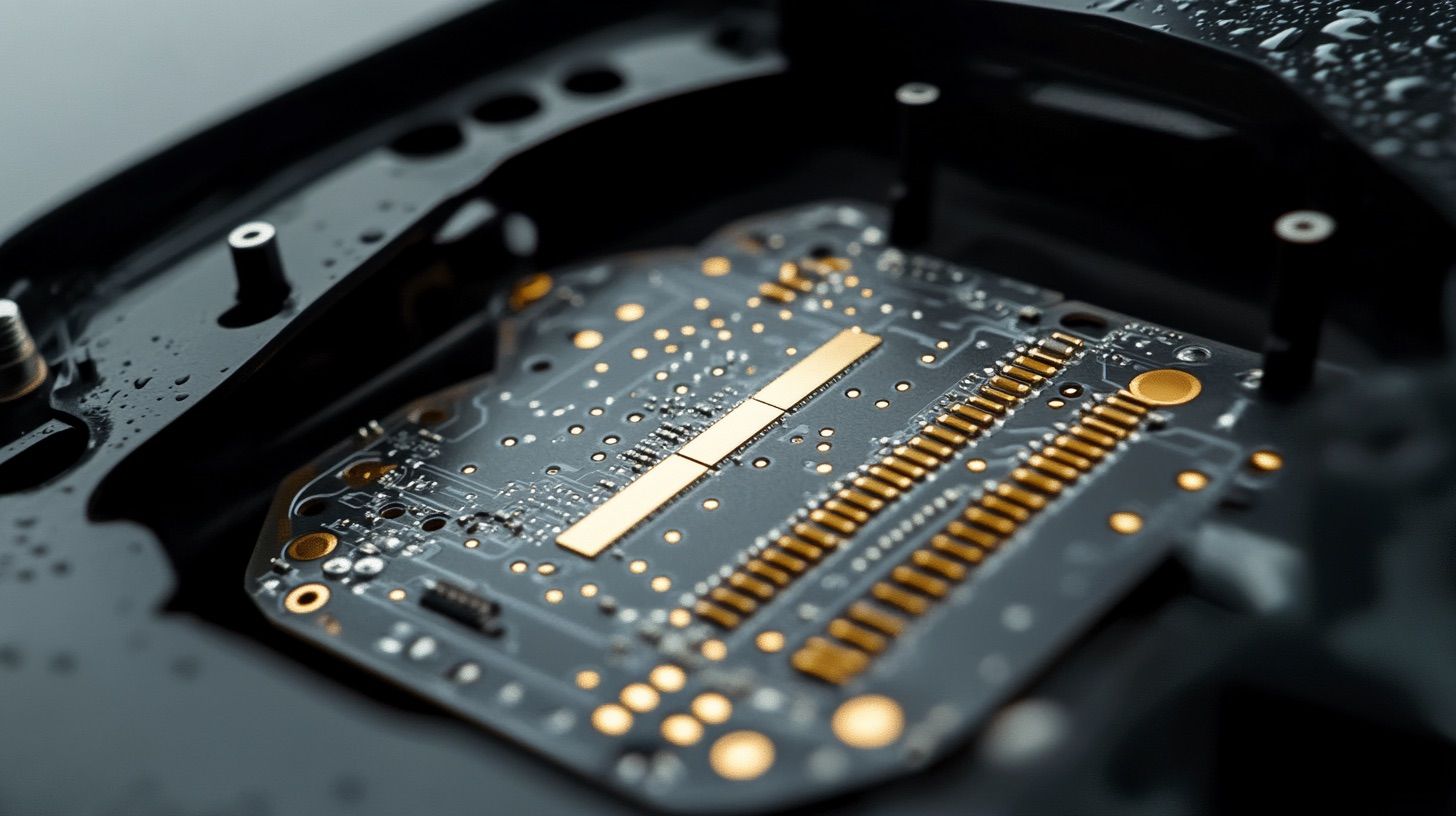
Automotive PCBAs face a protection problem that is more demanding than most electronics sectors — and less forgiving when it fails. A field failure in a consumer device generates a warranty return. A field failure in an automotive control unit can affect vehicle safety, trigger a recall, and generate liability exposure that dwarfs the original assembly cost.
The protection decision for automotive electronics is not straightforward. Different applications within the same vehicle have different requirements. An infotainment PCBA in a climate-controlled cabin faces a different exposure profile than a sensor mounted in the engine bay. A battery management system in an EV operates under thermal cycling conditions that standard conformal coatings were not designed for. There is no single technology that is optimal across all of these contexts.
P2i's approach is to start with the application — the PCBA geometry, the production line configuration, the thermal profile, and the qualification standard — before selecting the protection process.
Plasma coating for signal-sensitive and complex geometries
For automotive PCBAs where component density, signal integrity, and miniaturisation are the primary constraints, plasma PECVD coating provides molecular-level protection without the drawbacks of traditional conformal coatings. The dry, room-temperature process penetrates complex geometries — connectors, underfill areas, densely packed component layouts — without requiring extensive masking or adding measurable bulk.
Critically, plasma coating is thermally transparent. It does not impede heat dissipation from high-power components — a relevant constraint in powertrain control units and EV battery management systems where thermal management is an active engineering challenge, not a passive one.
The coating is 100% reworkable post-application, supporting the right-to-repair requirements that are increasingly entering automotive procurement specifications in Europe.
Liquid barrier coating for high-volume line integration
For Tier 1 suppliers already operating spray or dip-line infrastructure, liquid barrier coating offers a high-throughput protection path that integrates directly into existing manufacturing processes without capital expenditure on new equipment.
P2i's liquid barrier coating is engineered for the throughput and consistency demands of automotive volume production — process parameters matched to target line speed from qualification, conformal coverage across complex surface geometries, and PFAS-free formulations available across the portfolio.
The deployment model is the same as plasma: P2i engineers qualify the process on-site and remain embedded through production ramp. The per-unit commercial model means cost scales with production volume, with no fixed overhead or minimum volume commitment.
Proven at Tier 1 scale
P2i's automotive coating processes are deployed at production volume across Tier 1 infotainment and IVI programmes — including a European Tier 1 deployment running 1.5 million devices per year across three factories. The qualification approach is consistent across sites: same process parameters, same engineering oversight, same qualification standard — whether the factory is in the UK, Portugal, or Southeast Asia.
If you are a Tier 1 supplier or contract manufacturer qualifying protection for an automotive PCBA programme, our engineering team reviews your Qualification Test Plan and device specifications before making a recommendation. Get in touch to start the conversation.