Advancing Filtration Media Performance Without Compromising Airflow
Filtration media manufacturers face a difficult balancing act. Products need to resist liquid ingress while maintaining airflow, throughput and overall filtration performance. Traditionally, achieving one often means compromising the other.
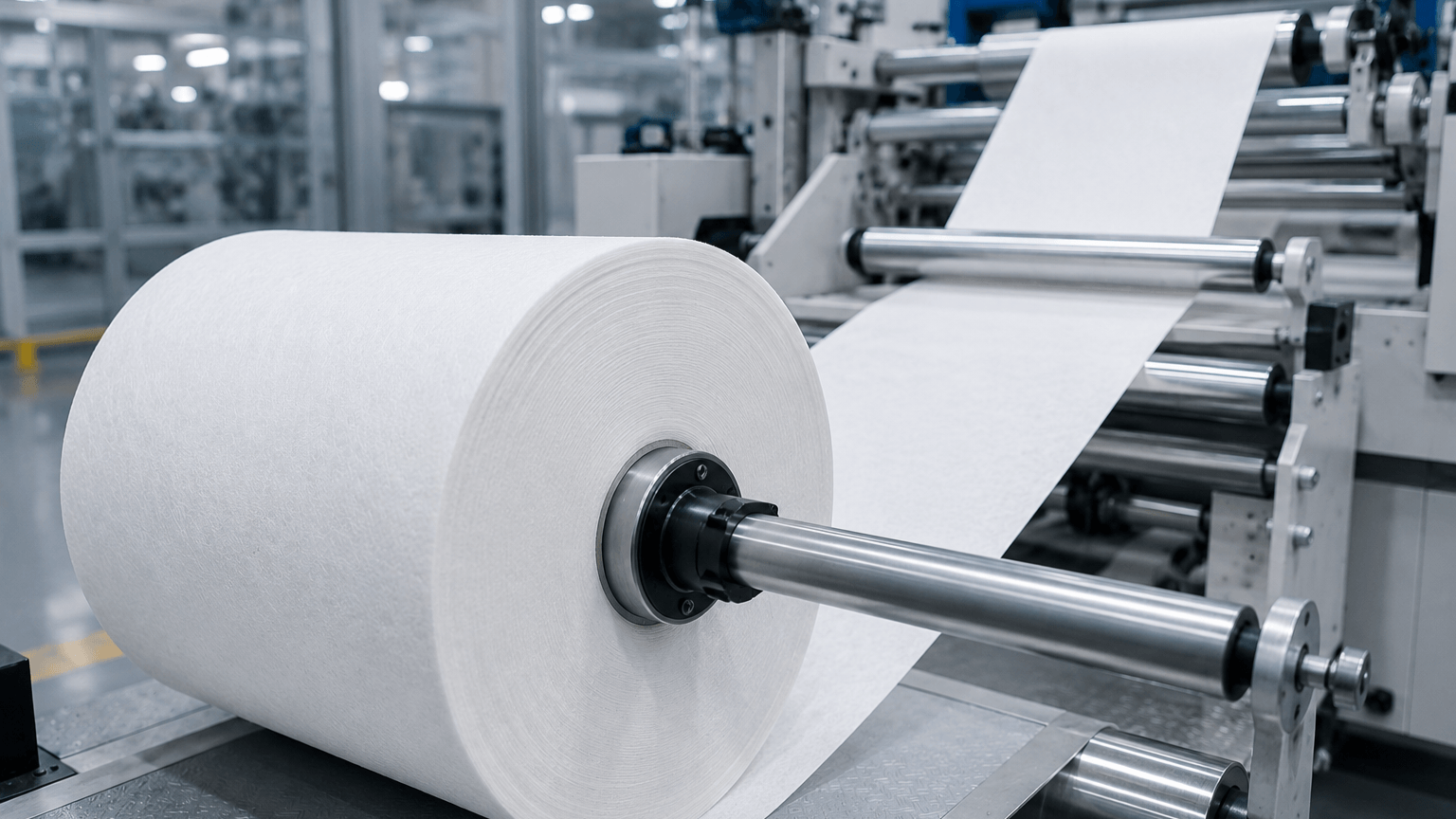
Filtration media manufacturers face a difficult balancing act. Products need to resist liquid ingress while maintaining airflow, throughput and overall filtration performance. Traditionally, achieving one often means compromising the other.
P2i helps solve this challenge by enhancing filtration media with an ultra-thin molecular coating that delivers exceptional liquid repellency without blocking pores or restricting airflow.
The Challenge Facing Filtration Media Manufacturers
Many filtration applications require porous media to withstand exposure to low-surface-tension liquids while continuing to perform reliably. However, conventional coating technologies often introduce new problems.
Common liquid-based conformal coatings can partially clog the microscopic pores within the media. This reduces airflow, creates unwanted pressure changes and can negatively impact overall system performance.
Manufacturers are also increasingly seeking solutions that are free from PFOA and PFAS concerns, generate minimal extractables and leachables, and remain compatible with sterilisation processes such as gamma irradiation.
Key industry requirements include:
- Protection against low-surface-tension liquid penetration
- Unrestricted airflow through porous media
- PFOA-free and PFAS-free solutions
- Low extractables and leachables
- Gamma sterilisation compatibility
- Consistent performance at scale
A Different Approach to Filtration Media Protection
P2i's Splash-Proof technology takes a fundamentally different approach.
Rather than applying a liquid coating that sits on the surface and risks blocking pores, Splash-Proof uses a molecular process to create an ultra-thin polymer film that bonds directly to the filtration media.
The resulting coating is typically less than 100 nanometres thick, allowing the media to retain its original structure and airflow characteristics while gaining powerful liquid-repellent properties.
The process is also aqueous-free and solvent-less, providing a cleaner and more sustainable alternative to many traditional coating methods.
Preserving Airflow While Improving Performance
Because the coating is molecularly attached to the media rather than filling pore structures, airflow remains largely unchanged.
This allows manufacturers to improve resistance to liquid penetration without introducing the pressure drops commonly associated with conventional coating technologies.
The result is enhanced throughput, improved product performance and greater reliability in demanding operating environments.
Achieving Market-Leading Liquid Repellency
Our Splash-Proof technology delivers some of the highest levels of low-surface-tension liquid repellency available today.
This enables filtration media to maintain functionality when exposed to challenging liquids while continuing to operate as intended.
For manufacturers, that means the opportunity to add value, improve product differentiation and unlock new performance capabilities without redesigning existing media structures.
Supporting the Future of Advanced Filtration
As filtration applications continue to evolve across healthcare, industrial and specialist markets, manufacturers need solutions that enhance performance without creating new compromises.
P2i's molecular coating technology helps filtration media achieve exactly that – delivering superior liquid protection, maintaining airflow and supporting next-generation product innovation.
If you're looking to improve the performance of your filtration media, get in touch with the P2i team to discuss your application and discover how our world-leading technology can help.